Global Economic Impact and the Current State of the Ready-Mix Concrete Market
To date, the global economy remains in a state of uncertainty due to the ongoing conflicts in the Middle East. Most notably in Vietnam, surging fuel prices—with no signs of slowing down—have placed significant pressure on the production costs of housing and infrastructure projects.

Current Status of Ready-Mix Concrete Prices
Thanks to its flexibility and convenience, ready-mix concrete (RMC) has made construction significantly easier and faster than in previous years. Accordingly, as concrete quality and project longevity improve, the selection of raw materials has become much more stringent.
Currently, the retail price of stone has surged by over 40%. This is primarily due to a complex supply chain involving extraction, crushing, port transportation, and multiple intermediaries. Since the entire process relies on machinery powered by fuel, an increase in overhead costs is inevitable, inadvertently placing a heavy financial burden on consumers.
This situation is not limited to stone but also affects other materials like river sand and manufactured sand. Meanwhile, although products such as cement and additives have experienced some fluctuations, the increases are relatively minor and have not yet caused significant market alarm.
Under these cost pressures, the ready-mix concrete market has undergone more than 12 price adjustments since March. Amidst this volatility, SMC Concrete has maintained its position through effective resource optimization. We offer a diverse portfolio of stone, sand, cement, and additives, allowing us to customize solutions for specific project requirements while ensuring the most competitive and reasonable prices for our clients.
The Need for Regulatory Mechanisms to Avoid Price Shocks
In the long term, the market requires macro-regulatory mechanisms to prevent extreme price shocks. According to Mr. Luong (Deputy Director of the Vietnam Institute of Real Estate Market Research and Evaluation), the State should act as a "policy arbitrator" by reducing or deferring taxes, fees, and land rent for ongoing projects. Additionally, there should be mechanisms to adjust construction contracts and material price indexes to protect contractors from losses. Banks should also consider restructuring debts to maintain cash flow within the market.
On the corporate side, developers need to proactively optimize costs and offer extended payment plans to customers instead of passing the entire cost burden onto selling prices.
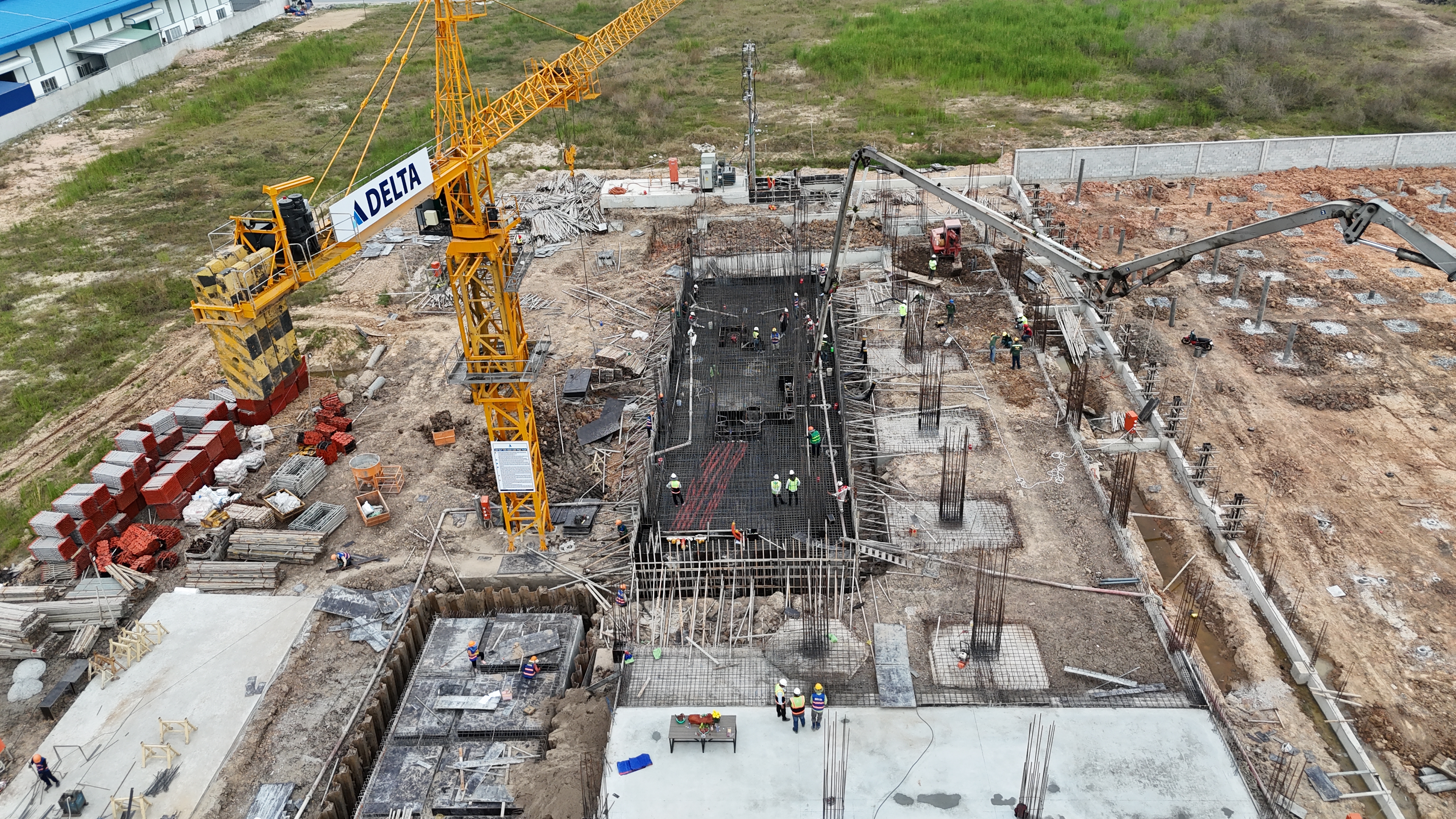
Echoing this view, Mr. Nguyen Van Dinh (Vice Chairman of the Vietnam Association of Realtors) noted that material costs currently account for about 50% of total construction value. Consequently, if the upward trend in material prices persists, housing prices are unlikely to decrease in the near future. Only through seamless coordination between the State, businesses, and banks can the market sustainably navigate this volatile period, ensuring the interests of homebuyers and the stability of the economy.
Other news

Watching the Ho Chi Minh City - Long Thanh Expressway Take Shape
11:24 12/08/2026
Nearly a year into construction, the expansion of the Ho Chi Minh City - Long Thanh Expressway is gradually taking shape, with several sections already paved with asphalt. Groundbreaking began in August 2025, with a total investment of VND 16,300 billion. The project spans 22 km, starting from the Ring Road 2 interchange in Ho Chi Minh City and ending at the interchange with the Bien Hoa - Vung Tau Expressway. Once completed, it is set to become the key artery connecting the city center with Long Thanh Airport, with operations expected to begin later this year.

Saigon River Pedestrian Bridge: Main Pier Concrete Pour Begins, Aiming for Sept 2 Completion
09:04 22/07/2026
The Saigon River Pedestrian Bridge project has officially entered a critical structural phase with the first concrete pour for the main pier foundation. This milestone marks a significant step for Ho Chi Minh City’s new iconic landmark to accelerate toward its inauguration on National Day (September 2). On the afternoon of May 11, a delegation of city leaders led by Vice Chairman of the Municipal People’s Committee Bui Xuan Cuong and Head of the Municipal Party Committee’s Propaganda Department Duong Anh Duc conducted an on-site inspection. The delegation monitored the progress at pier TC2—a key component determining the overall quality, safety, and timeline of the entire project.

Restricting Vehicles on Phu My Bridge for 1.5 Months to Repair the Road Surface: Details of Alternative Routes
08:50 22/07/2026
From May 30 to July 11, Phu My Bridge (HCMC) will carry out road surface repair construction in the direction from Cat Lai Port to District 7. To avoid prolonged traffic jams, drivers are advised to clearly understand the alternative routes below.